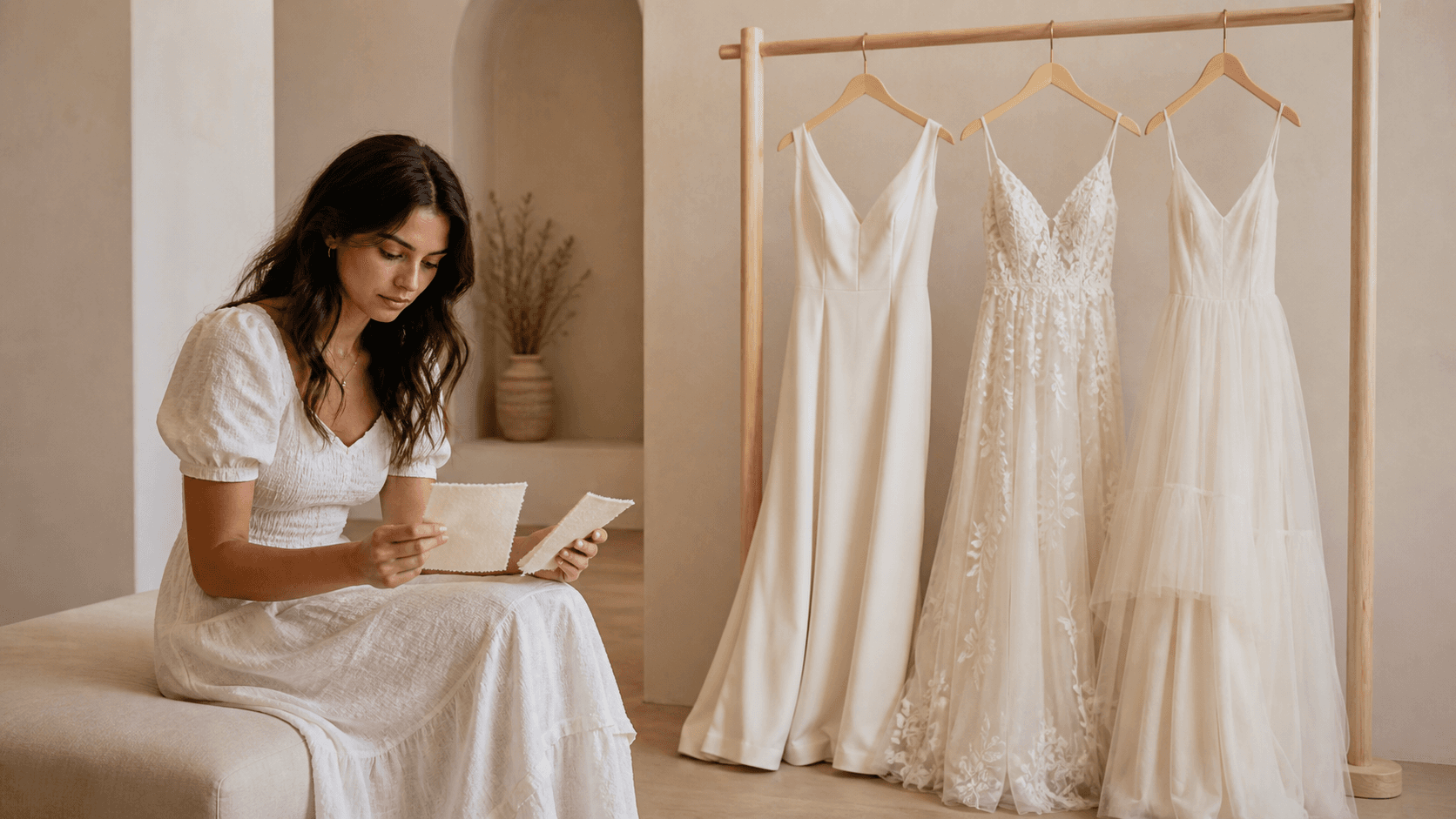
Wedding Dress Regret? 7 Questions You Must Answer Before Buying Again
Wedding dress regret after saying yes? Use this seven-question test to decide whether to style, alter, or replace your gown without panic.

Wedding dress regret? 7 questions you must answer before buying again
She had already spent nearly $4,000.
The gown was elegant. Her mother loved it. It made sense beside her fiancé's custom tux. After four bridal boutiques in two exhausting days, saying yes probably felt less like a reckless decision than the end of a very expensive marathon.
Then the dress arrived.
It was still beautiful. It just did not feel like her.
One bride described exactly that in an August 2026 wedding-dress regret thread. She was not choosing between a good dress and an obviously bad one. She was choosing between the gown she had bought, the first gown she had loved, her mother's reaction, the money already spent, and the fear of making the same mistake twice.
This is the brutal part of wedding dress regret: the dress can be objectively lovely and still feel wrong.
It is tempting to treat that feeling as a verdict. Do not. Treat it as a signal that needs a diagnosis.
If your regret is vague, gets louder after scrolling, and disappears when you are actually wearing the gown, pause before changing anything. If the problem is specific and related to fit, support, proportion, or styling, talk to a skilled bridal tailor. If the gown consistently feels like someone else's idea of you, even under good fitting conditions, it may be time to explore an exchange, resale, redesign, or replacement.
The seven questions below will help you tell the difference.
First, protect your options
Before you take the test, read your receipt and contract, then contact the salon promptly. Ask what can still be canceled, exchanged, changed, held, or reordered. Policies vary, and waiting while you panic can remove choices that exist today.
Do not remove tags or authorize irreversible alterations until you understand those choices. Write the problem in one sentence, save clear photos of the current fit, and note the wedding date. If the gown has arrived, book an assessment with an experienced bridal tailor. If it has not, ask the salon how the ordered size and configuration will differ from the sample you tried.
Protecting your options is not the same as deciding to replace the dress. It simply keeps panic from making the decision for you.
Why saying yes can suddenly feel like saying no
Bridal shopping turns one garment into a referendum on your taste, body, budget, family, photographs, and future memory. Then it asks you to decide under bright lights while several people wait for you to have a cinematic reaction.
That is not an ordinary shopping environment.
Recent regret threads echo the same pressure points: a parent preferred one gown, the shopping group was tired, a sample did not fit, the ordered dress looked different, alterations happened late, or social media kept supplying new options after the contract was signed. In another July 2026 Reddit thread, a bride explained that the sample had been too small and the gown ordered to her measurements felt different when it arrived. She would not see the final altered look until less than a week before the wedding.
Of course that feels frightening. She was comparing three different objects: a squeezed sample, an unaltered gown, and a finished dress that did not exist yet.
At least one major bridal retailer is changing its business around that anxiety. In May 2026, Axios reported on a new bridal fit guarantee created in response to changing bodies, shorter shopping timelines, rush orders, and late alterations. Fit anxiety is not a personal failure. It is a real retail, sizing, and timing problem.
But not every uneasy feeling is a fit problem. Some are comparison problems. Some are styling problems. Some are identity problems.
The expensive mistake is treating all three as the same thing.
The 7-question wedding dress regret test
Do this before you book another appointment, authorize a major alteration, or put a second gown on a credit card. Write the answers down. Regret gets more useful when it has to become specific.
1. Would I dislike this dress if nobody else had commented on it?
Remove the audience for a minute: your mother's favorite, the friend's comment, the stylist's enthusiasm, the bridal subreddit, the designer label. When you picture yourself wearing this gown privately, what feels wrong?
If your answer is mostly about how other people may judge it, the dress may not be the problem. If you can identify a quiet, persistent disconnect that existed before the comments, keep going. That deserves attention.
2. Can I name the problem in one sentence?
"I hate it" is a feeling. It is not yet a design brief.
Try to finish one of these sentences instead:
- The bodice does not give me enough support.
- The waist sits lower than the proportion I loved in the sample.
- The lace feels romantic, but I wanted a cleaner and more architectural look.
- The gown matches the venue, but it does not match my personal style.
A specific problem can be priced, tested, styled, or accepted. A cloud of panic cannot.
If you still cannot name the issue, take a short break from wedding content before making a financial decision.
3. Am I judging the actual dress—or an unfinished version of it?
A clipped sample is not your gown. An unaltered gown is not the final fit. A stock photo is not your body.
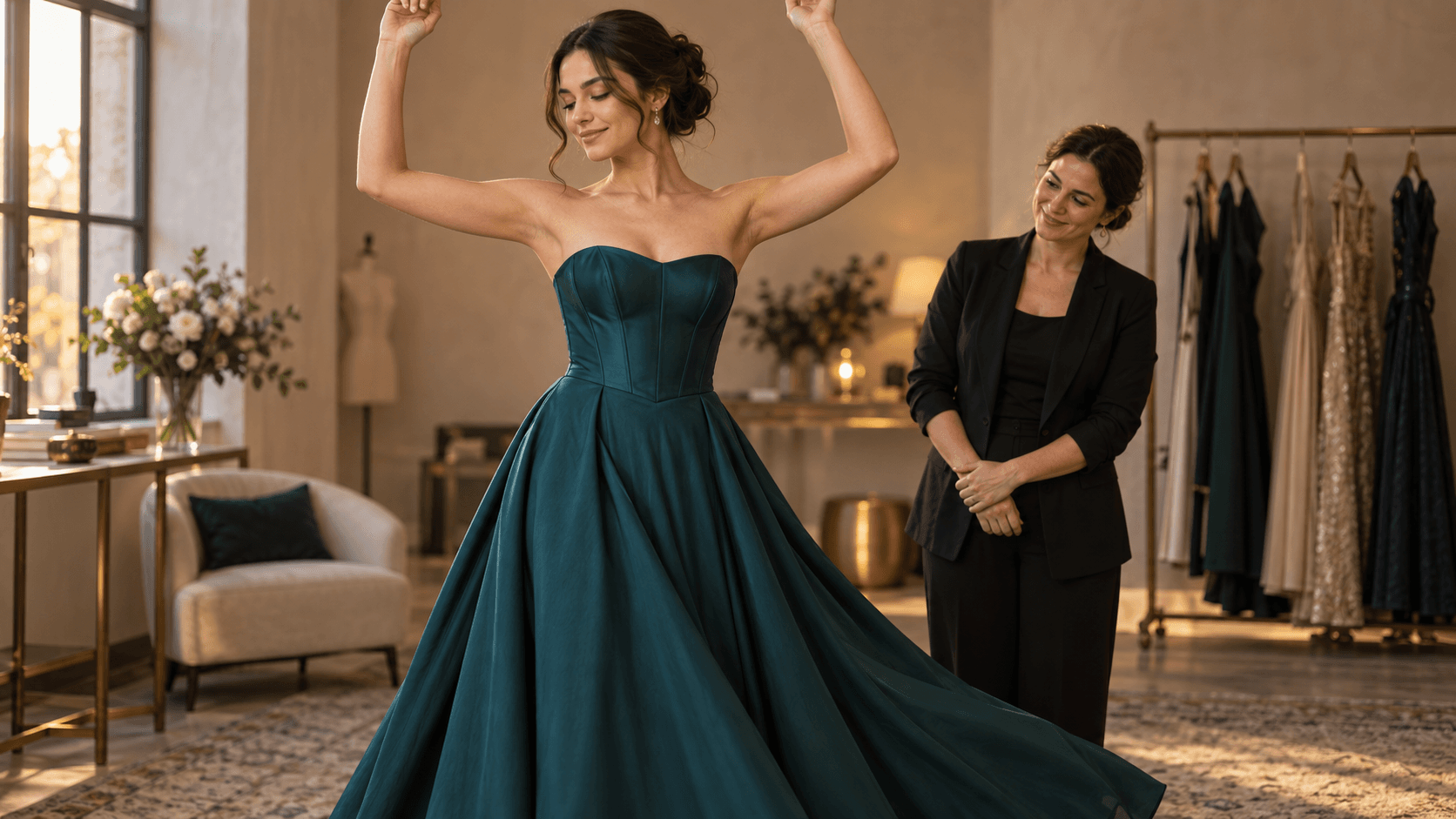
Reassess the closest available version under useful conditions. Wear the undergarments and heel height you expect to use, ask a stylist or tailor for safe temporary adjustments, and record how the gown looks while you walk, sit, turn, and lift your arms.
Then separate what you see into two columns:
- Unfinished: hem, bustle, strap length, bodice fit, support, temporary wrinkles, missing accessories.
- Fundamental: silhouette, fabric character, neckline concept, amount of volume, overall design identity.
Do not buy a new dress to solve an unfinished hem. Do not expect a hem to solve a fundamental design mismatch.
4. Is the problem fit, styling, or design?
These categories sound similar in a panic. They lead to different decisions:
- Fit: pulling, gaping, slipping, weak support, restricted movement, or proportions that are not sitting where the design intended.
- Styling: the veil, jewelry, sleeves, shoes, hair, bouquet, or the balance between a simple gown and the drama you expected.
- Design: you wanted sleek but bought ornate, wanted soft but bought structured, or chose the gown that pleased the room instead of the one that felt like you.
Fit can often be improved. Styling can change the overall effect. Design is the category most likely to require a significant reconstruction or a different gown.
The Knot's expert guide to wedding dress regret recommends checking the salon's options, consulting a reputable seamstress, reconsidering the full styled look, and trying the gown again before assuming replacement is the only answer. Test each possibility separately.
5. Can a bridal tailor fix it without rebuilding the dress?
Bring the gown—or detailed construction photos if the gown has not arrived—to an experienced bridal tailor. Ask three direct questions:
- Is this change technically possible with this fabric and construction?
- What could the change affect elsewhere in the gown?
- What are the realistic cost, fitting schedule, and deadline?
Some adjustments may be straightforward. Others can cascade into the lining, boning, lace placement, seams, or support system. Vogue's expert-backed guide to wedding dress alterations explains why work such as reshaping necklines, resizing gowns, adding sleeves, and adjusting linings requires a specialist and a real fitting plan.
Do not approve a major alteration based only on the sentence "we can probably do that." Ask what the finished result can realistically look like. Our wedding dress alterations cost guide explains why construction complexity matters before you commit.
6. Did the dress change—or did my reference point change?
After purchasing a gown, your algorithm does not politely stop showing you wedding dresses. It gets better at showing them to you.
Suddenly there is a sharper basque waist, a cleaner silk column, a better sleeve. Your real dress is competing against professionally photographed alternatives that you never had to wear, budget, alter, or receive on time.
This is choice fatigue with a veil on.
The Knot's experts advise limiting options and reducing exposure to new styles after ordering. Try a short no-scroll reset—seven days if your timeline allows. If the regret softens, comparison may be contributing to it. If the same precise concerns remain, you have clearer information to act on.
7. Which cost can I live with after the wedding?
There may be no cost-free answer.
Keeping the gown can cost emotional comfort. Altering it can add expense and construction risk. Replacing it can mean a second gown, rush fees, new alterations, and deciding what to do with the first dress.
List the complete cost of each path—not just the new price tag.
Then ask the harder question: on the wedding morning, which decision is most likely to let me get dressed without negotiating with myself?
That answer matters more than recovering every sunk dollar or chasing a fantasy no real garment can satisfy.
What your answers are telling you
You do not need a numerical score. Use the pattern:
- Keep it and style it if questions 1 and 6 point mainly to outside opinions or comparison. Test the complete look once—veil, hair, jewelry, shoes, and bouquet—before judging the gown in isolation.
- Alter it with a defined scope if questions 2 through 5 identify a precise issue and a bridal tailor confirms a realistic solution. Get the scope, cost, fitting dates, and expected result in writing.
- Explore an exchange, resale, redesign, or replacement if question 4 reveals a persistent design mismatch and question 7 confirms that the timeline and total cost are workable. Check the contract and salon options before committing more money.
Mixed answers are normal. Protect any salon options, then test the least irreversible solution first. If you need to compare a different direction, you can explore a new wedding dress concept. If your conflict is "this neckline, but that skirt and less lace," upload the references you keep comparing and turn them into one clear design brief.
How to prevent wedding dress regret before saying yes
You cannot guarantee perfect certainty. You can make the decision cleaner.
- Write three non-negotiables and three dealbreakers before the appointment.
- Limit your entourage to people who understand your taste, and do not force a purchase because the room is tired.
- Ask how the sample differs from the size and configuration you will receive, then record the gown in motion when the salon permits it.
- Read the contract, delivery estimate, alteration assumptions, and return policy, and price the finished look before paying.
- Once you buy, stop recreational dress shopping unless a specific problem appears.
Most importantly, replace "Is this the one?" with better questions:
Does this dress support my body? Does it express my taste? Does it fit the event and the budget? Can I move through the day in it? Do I understand what I am buying?
Those questions are less romantic.
They are also much harder for a sales room, a trend cycle, or an excited relative to answer for you.
Frequently asked questions about wedding dress regret
Is wedding dress regret normal?
It is common enough to generate frequent bridal-community discussions and expert guidance, especially between purchase and the first proper fitting. The feeling does not automatically mean you chose the wrong gown. Diagnose whether the trigger is outside opinion, comparison, unfinished fit, styling, or a genuine design mismatch.
Should I buy a second wedding dress?
Only after you have checked the first gown under realistic fitting conditions, reviewed the contract, consulted a bridal tailor, and calculated the full replacement timeline and cost. A second dress can be the right decision, but it should solve a named problem rather than temporarily quiet panic.
Can alterations fix wedding dress regret?
Alterations can resolve many fit and proportion issues, depending on the gown's construction and seam allowances. They cannot reliably turn every silhouette, fabric, or structured bodice into a completely different design. Get an in-person assessment from an experienced bridal tailor before assuming a change is simple.
What if my wedding is only weeks away?
Contact the salon and a bridal alterations specialist immediately. Ask for the safest achievable options within the remaining time, prioritize fit and movement, and avoid adding a large redesign simply because the deadline makes every feeling louder.
The dress does not need to win an argument
Wedding dress regret often begins when a bride realizes she did not make one decision. She made a decision inside a chorus.
The mother. The stylist. The group chat. The algorithm. The budget. The sample clips. The imagined photographs. The version of herself she thought a bride was supposed to become.
The way out is not to find a gown nobody could criticize. That gown does not exist.
The way out is to identify the real problem, test the fix, understand the cost, and choose a dress you do not have to defend.
Your wedding gown does not need to prove that you have perfect taste.
It needs to let you walk forward without wishing you were wearing someone else's life.