Your Wedding Dress Isn't Ready Until It Passes This Final Fitting Checklist
Use this final wedding dress fitting checklist before pickup: test sitting, walking, the hem and bustle, then get a clear plan for any unfinished alterations.
Your wedding dress isn't ready until it passes this final fitting checklist
The garment bag is already on the counter.
Your friend has taken the photograph. The skirt is spread perfectly around your feet. Someone says you look beautiful, and you do. After months of appointments, decisions, and messages, you are desperate to call this one thing finished.
Then you try to sit down.
That is the moment a final fitting earns its place on your calendar.
A final wedding dress fitting checklist should cover the actual outfit, comfortable movement, the hem, closures, bustle, completed alterations, and the handoff home. Before the dress goes into its bag, you should know how to wear it, how to manage it, and what happens if something still needs attention.
Looking lovely in the mirror is part of the appointment. Being able to live your wedding day in the dress is the rest.
A pickup appointment needs room for a real try-on
When booking the last visit, ask whether it includes a full fitting or only collection. Those are different appointments, even if both happen near the wedding.
Confirm that the person responsible for the alterations will be available to discuss any remaining concerns. If the dress will be steamed or pressed after you approve the work, ask when you will see the finished result and collect it.
David's Bridal's alterations timeline places the final fitting around one to two weeks before the wedding and includes a bustle lesson. Treat that as one retailer's typical schedule. Your gown, travel plans, and alterations specialist's availability determine yours.
If you leave for a destination wedding before the ceremony date, tell the shop your departure date. A dress ready on Friday is no help if your flight leaves Thursday.
The useful question is: “If we find a problem at this appointment, when could you address it and let me try it again?”
Ask while there is still a calendar to work with.
Bring the outfit you will actually wear
The final fitting is a poor time for substitute shoes or an almost-identical bra.
Pack your wedding shoes, intended undergarments, any slip or petticoat, and the accessories that affect how the gown sits. Include a belt, detachable sleeves, or an overskirt if those are part of the look. Bring your reception shoes too if you plan to change into them.
David's Bridal's alterations questions guide specifically emphasizes the intended shoes and undergarments because they affect the hem and fit. It is worth checking both before you leave home.
Also bring:
- The person who will help you dress or bustle the train, if possible.
- A charged phone for notes and an instructional video, with the specialist's permission.
- Your alteration agreement or written list of requested changes.
- A short list of questions you have been saving between appointments.
If an essential item has changed since the last fitting, say so before anyone starts adjusting the gown. New shapewear, different shoes, or another petticoat can change what you are evaluating.
You do not need a room full of opinions. You need the equipment and help you will actually have on the day.
Sit before you decide the bodice fits
A still photograph can hide a surprisingly demanding dress.
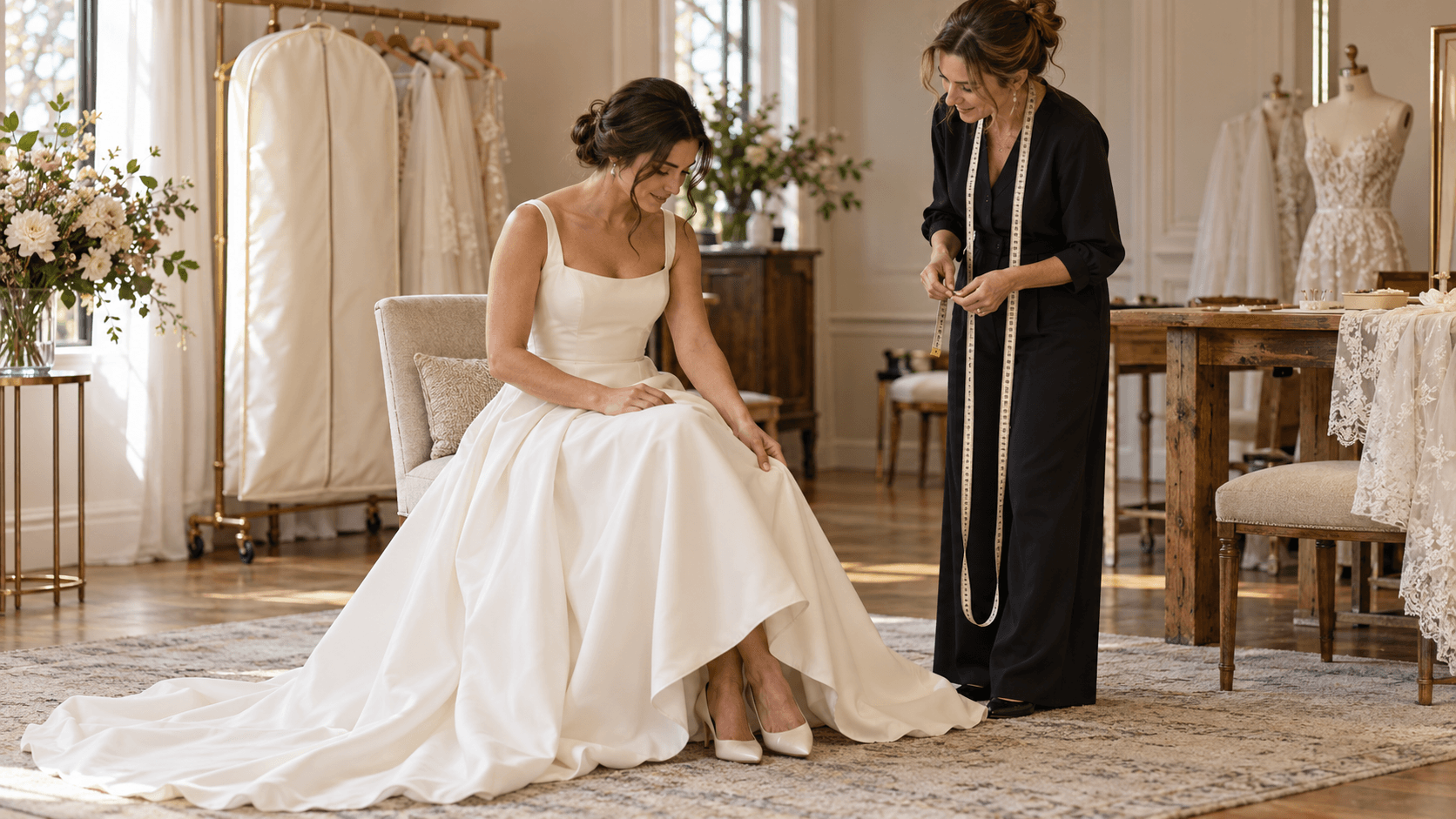
Once the specialist has fastened everything correctly, stand naturally. Let your shoulders settle. Breathe normally. Then ask to sit in an ordinary chair, rise again, and reach forward as if taking a glass from a table.
Try a gentle hug. Lift your arms to the height your planned dancing requires. If you will use a mobility aid, include it in the fitting and ask for enough space to rehearse your usual movements.
Describe what you feel with specifics:
- “The top edge digs in when I sit.”
- “This strap slides as soon as I reach.”
- “The neckline shifts when I lean forward.”
- “I can stand comfortably, but this seam presses when I bend.”
Those observations give the specialist something useful to assess. “I look wrong” gives you both a much harder starting point.
A structured gown may feel different from everyday clothing, but pain, restricted breathing, or movement you cannot manage comfortably needs attention. Stop the test if it hurts. Do not force a zip or keep pulling at a closure to prove it can shut.
If your wedding dress feels too tight after alterations, ask the specialist to check the cause. The answer may involve the closure, lining, cups, straps, or fit in a particular area. A photograph alone cannot establish which change is needed or whether the garment has room for it.
You should not have to promise a different body by the wedding day to make the fitting feel successful.
For a neckline that keeps slipping, our guide to keeping a strapless dress up explains useful questions about support and fit. Bring the concern to the person who can inspect your actual gown.
Check the hem on the floor, with both pairs of shoes
Step down from the fitting platform before approving the length.
With the specialist's help, walk forward, turn, and stop. Notice whether your toe catches an inner layer, whether the front folds under your foot, and whether you can manage the skirt without constantly gathering it in both hands.
Ask how to lift it for stairs and getting into a car. Rehearse a small step only if there is a safe, stable place to do so.
There is no single hem measurement that suits every silhouette, shoe, and preference. Ask the specialist to explain the intended length and demonstrate how the outer skirt and underlayers should behave together.
Then put on the reception shoes.
Lower shoes may leave more fabric at floor level. A bustle generally manages the train; do not assume it solves an overlong front hem. If the combination does not work, discuss the options while the specialist can see it: different shoes, an agreed hem compromise, or another practical plan for the evening.
Discovering that conflict now is useful. Discovering it during the first dance is much less convenient.
Your helper should perform the bustle, not just watch it
The specialist can make a wedding dress bustle look effortless. They know which point connects where.
Your helper may be meeting those fastenings for the first time in dim reception lighting.
Ask for a demonstration, then have your helper repeat it while the specialist watches. With permission, record close views of the attachment points and a wider view of the finished shape. Capture any matching numbers, colors, or other cues the specialist uses.
Once the bustle is secured, walk and turn again. Check how the train sits and ask whether every intended layer has been gathered. Your helper should also know how to release it.
If the helper cannot attend, ask the specialist to explain the sequence clearly on video. Arrange a practice at home as soon as practical, following the instructions and keeping the gown clean.
For a dress without a bustle, confirm the intended plan for managing the train. A wrist loop, detachable train, or change of outfit has its own practical demands. Use the solution the gown was designed or altered to support.
“Someone will work it out” is a surprisingly fragile reception plan.
Separate unfinished work from unfamiliar feelings
You can love a dress and feel overwhelmed when it becomes the real dress.
You can also have a real alteration concern. Both deserve space, but they need different responses.
Compare the gown with your agreed alteration list. Were the straps adjusted? Is the lining complete? Are detachable pieces present? Can the closures be used as demonstrated? Ask the specialist to inspect any loose trim, rough edge, visible unfinished stitching, or area you are unsure about.
If work is still pinned or temporarily basted, ask what remains and when you will try the completed version. A proposed adjustment is not the same as a finished adjustment you have worn.
Take a few ordinary photographs from the front, side, and back after moving, rather than only after someone has arranged every fold. Use them to remember a specific concern, not to hunt for a flawless angle.
Some folds are part of how fabric moves. If a crease or line worries you, ask what causes it and whether a change would improve it without creating another problem.
When everything functions but you are questioning the style itself, our wedding dress regret guide can help you separate a styling doubt from a reason to replace the gown. You do not need to make a second major purchase in the fitting room.
Leave with a specific plan for anything unresolved
“We'll sort it” can sound wonderfully reassuring. It becomes more useful with a date attached.
If there is unfinished work, agree on the exact change, who will do it, any additional charge, the next try-on, and collection time. Ask the shop to put the plan in writing or confirm the summary you send afterward.
Here is a simple script:
“When I sit, this edge presses into me. Can you check what is causing it? What adjustment do you recommend, and when can I try the finished change before I travel?”
For a changed quote, ask which work is included and which is additional. Our wedding dress alterations cost guide offers questions for understanding that scope.
If the specialist says a requested change is not feasible in the remaining time, ask for realistic alternatives. A narrowly targeted adjustment may be possible where a redesign is not. A second opinion may help, but confirm availability before transferring the dress or assuming another person can finish it faster.
Keep the existing arrangement clear until you know what the alternative actually involves.
The handoff matters after the fitting ends
Before the gown goes home, ask how to transport, hang, and store this particular dress. Heavy skirts, delicate straps, embellishments, and different fabrics can need different handling.
Confirm whether steaming or pressing is complete, and who should handle any creasing that happens during travel. Do not assume a household steamer is suitable for every fabric or decoration. Follow the maker's care guidance and the specialist's instructions.
Check the bag for every separate piece: sleeves, belt, overskirt, straps, or any accessories left with the shop. Keep your bustle instructions and the shop's contact details somewhere your helper can find them.
For brides still designing a gown, these same observations make a useful brief. You can start a dress concept or upload a reference, then describe the seated comfort, coverage, movement, and train handling you want to discuss with a maker. A visual concept helps communicate preferences; it does not replace an in-person fitting or confirm alteration feasibility.
Save this wedding dress pickup checklist
Before leaving, make sure you can answer these eight questions:
- Outfit: Did I try the gown with my actual undergarments, accessories, and both pairs of shoes if needed?
- Comfort: Can I breathe, sit, stand, reach, and move comfortably without forcing the dress?
- Length: Have I checked the hem and inner layers while walking on the floor?
- Closures: Do I and my helper understand how to fasten and release everything?
- Train: Can my helper manage the bustle or other agreed train solution?
- Work: Have we checked the completed alterations against the agreed list?
- Open issues: Is every unresolved concern attached to a clear next step and date?
- Handoff: Do I have every separate piece, care instructions, and a transport plan?
Then take the photograph.
Let the skirt settle naturally. Let your shoulders drop. This time, the picture can remind you of more than how the dress looked.
You know what it feels like to move through the day in it.