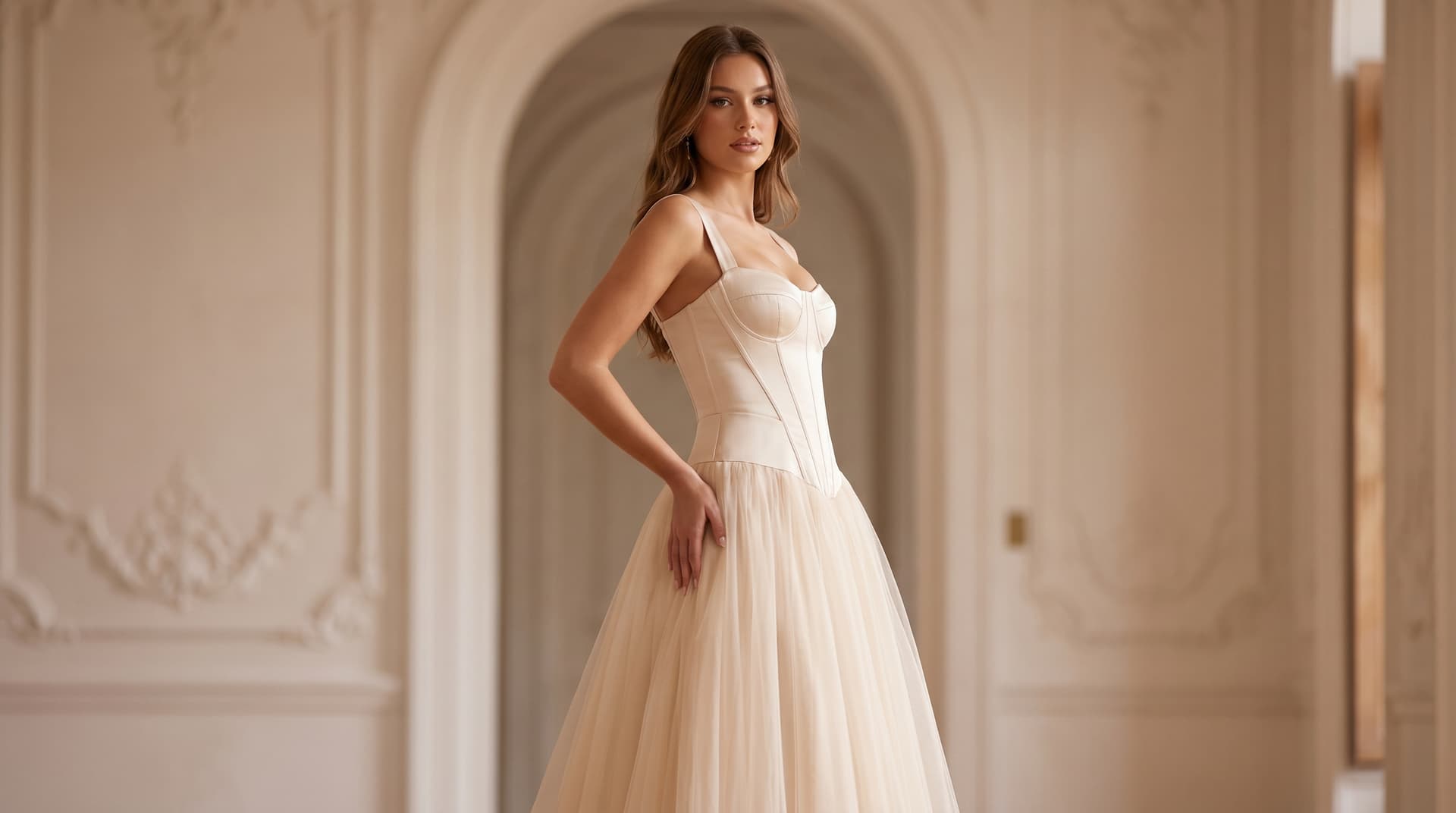
Plus Size Wedding Dresses: A Fit-First Guide to Silhouettes, Fabrics, and Made-to-Measure Sizing
Plus size wedding dresses should feel supportive and effortless. Learn silhouettes, fabrics, and how made-to-measure custom sizing works for any measurements.

Shopping for plus size wedding dresses should feel exciting—not like a scavenger hunt for the one sample that fits “close enough.” If you’ve tried on gowns where the bust is fine but the waist sits too high, the sleeves feel tight, or the neckline needs constant adjusting, you’ve already learned the hard truth: bridal sizing isn’t consistent, and “going up a size and altering down” doesn’t always solve proportion and support.
Today’s plus size wedding dress (plus size bridal gown) search isn’t just about finding a larger number on a tag—it’s about choosing a silhouette that moves with you, picking fabrics that feel good on skin, and getting the kind of structure that makes you feel secure all day.
This guide breaks down what matters most: how fit works, which silhouettes tend to feel easiest to wear, how lace and sleeves change comfort, and how made-to-measure sizing can remove the “standard size chart” problem entirely. If you want to start exploring styles right away, you can explore made-to-measure wedding dress options for ideas, or upload plus size wedding dress inspiration photos when you already have references you love.
Plus size wedding dresses: what “good fit” really means (beyond the size number)
A great-fitting dress is never just “the right size.” For plus size wedding dresses, fit usually comes down to a few practical checkpoints:
Support you can forget about
If you’re tugging at the neckline or thinking about straps all day, you’re not enjoying your wedding. Look for (or request) structure that matches your comfort level:
- Built-in support (cups, inner lining, supportive bodice construction)
- Secure waist shaping that sits where your waist actually is (not where a pattern assumes it is)
- Back coverage that feels stable (especially for strapless or off-shoulder looks)
Proportions that match your shape
Many off-the-rack gowns are drafted from a “base” size and then graded up. That can change how darts, waist placement, bust shaping, and armholes behave. Made-to-measure (or heavy alterations) matters most when your proportions don’t match a single standard block.
Movement and comfort
Before you fall in love with the mirror moment, test the dress:
- Sit, raise your arms, and take a few deep breaths.
- Check sleeve comfort (especially if you’re considering a long sleeve plus size wedding dress or plus size wedding dress with sleeves).
If it passes the movement test, you’re much closer to a dress you’ll actually love wearing.
Plus size wedding dresses by silhouette (how to choose what feels like “you”)
There are no “rules” you have to follow. But different silhouettes create different experiences—especially around weight distribution, mobility, and how supported your torso feels.
A-line (often the easiest all-day wear)
An A-line gives definition through the waist (or just under it) and then releases over the hips. If you want something classic, comfortable, and versatile across venues, this is the silhouette that rarely lets you down.
If you like lace, long-tail searches like a line lace wedding dress can be a great starting point for inspiration, especially when paired with sleeves, a lined bodice, or a structured waist.
Ballgown (drama + comfort, with the right waist support)
Ballgowns can be surprisingly comfortable because the skirt isn’t hugging the hips or thighs. The key is making sure the bodice is supportive enough so the dress doesn’t feel heavy on your shoulders.
Mermaid / fit-and-flare (beautiful, but plan for movement)
This shape can be stunning—but it’s more sensitive to pattern proportions and mobility. For plus size wedding dresses, a fit-and-flare with a slightly higher flare point (and thoughtful stretch/lining choices) often feels easier than a very tight mermaid.
If you’re choosing this silhouette, pay extra attention to:
- walking comfort
- sitting comfort
- the seam placement through hip and thigh
Sheath / column (minimal lines, but precision matters)
Simple silhouettes are unforgiving in the best way: they look clean and modern, but they reveal fit issues quickly. If you love a column look, made-to-measure sizing is a huge advantage because small pattern changes make a big difference in how the dress falls.
Basque waist (a fast-rising style to know)
A basque waist has a pointed or curved dip at the front. Compare the depth of that dip and the bodice length when choosing a design; the waistline label alone does not establish the internal support.
Lace, sleeves, and lining: details that change comfort fast
The same dress can feel completely different depending on fabric and finishing choices. These are the design details that matter most for plus size wedding dresses.
Lace types (and why “lace” isn’t one thing)
If you’ve ever tried on a lace dress and felt itchy, you’re not alone. Lace comfort depends on the lace type and what’s underneath it.
- Chantilly lace is often lighter and more delicate—searches like chantilly lace wedding dress have been rising, and it’s a good option if you want romantic texture without heavy stiffness.
- Full lace wedding dress styles can be gorgeous, but comfort depends on lining and placement (especially at the bodice, underarm, and sleeve seams).
Sleeves: pretty, practical, and worth designing carefully
Sleeves are a common request because they can add coverage, warmth, and a more secure feeling. If sleeves are part of your vision, consider long-tail styles like:
- lace wedding dress with sleeves
- plus size wedding dress with sleeves
- long sleeve plus size wedding dress
Comfort checklist for sleeves:
- enough ease at the bicep and elbow so you can bend your arms naturally
- soft lining at the underarm seam
- the right sleeve pattern for the fabric (lace sleeves behave differently than crepe)
Lining and opacity (especially for lace and lightweight fabrics)
If you want lace but not sheerness, request a fully lined bodice or a specific lining tone. Small choices—like lining the bodice but keeping sleeves unlined—can make the dress feel both elevated and wearable.
Made-to-measure plus size wedding dresses: how Build-a-Dress custom sizing works
If you’ve searched “plus size wedding dresses” and felt boxed in by limited in-store samples or inconsistent size charts, made-to-measure solves a different problem: the dress is built for your measurements from the start.
Here’s the practical workflow we use (and what you can do to get the best results).
Step 1: Share your vision (text or photos)
You can start from a text description (silhouette, neckline, sleeves, fabric) or you can begin with images. If you already have references—Pinterest saves, boutique try-on photos, celebrity-inspired details—use the upload flow so the AI has something concrete to work from: upload plus size wedding dress inspiration photos.
Step 2: Generate design directions (then refine)
Our AI generates design options you can react to and refine—useful when you’re narrowing the mix of silhouette + neckline + sleeves.
If you want to iterate quickly, you can start designing a made-to-measure plus size wedding dress and test a few directions—A-line lace with sleeves, satin fit-and-flare, basque waist with a clean skirt—before committing to one.
Step 3: Review a visual concept and instant estimate
Record fabric, lining, support, sleeve comfort, and train preferences in the design notes. A generated image helps communicate the direction but cannot establish the fit or internal construction of the garment.
Create a front preview, choose Get free quote, and sign in or create an account when prompted. The quote is an automated estimate based on the design information and visible complexity, not a bid from a seamstress. Review the order details before payment.
Step 4: Measurements (the part that changes everything)
This is where made-to-measure becomes real. Instead of choosing a standard size, you provide your measurements (and we guide you through what to measure). This is how we can create custom sizes regardless of your proportions—petite, tall, fuller bust, larger hip-to-waist ratio, or anything in between.
Tips for cleaner measurements:
- Measure in the undergarments you plan to wear (or something similar).
- Take measurements twice, and use a friend if possible.
- Note your shoe height so hem length is correct.
Step 5: Crafting, updates, and delivery
After checkout, Build-a-Dress coordinates the order with a production partner. Human makers use the agreed direction and submitted measurements. Plan around 2–3 months from confirmation to delivery, with additional time for design decisions and an optional local fitting; confirm your event deadline before ordering.
Step 6: Optional local tweaks
Even with made-to-measure, small local tailoring can be helpful—especially for personal comfort preferences (strap length, hem, slight waist adjustment). The goal is that tweaks are minor—not a full rework.
Shopping smarter (even if you go custom): budget, timelines, and “near me” searches
Some brides want an in-store experience first. Others want custom from day one. Either way, these are the questions that protect your time, money, and sanity.
If you’re comparing boutiques
If you want to try on dresses at a local boutique, ask these questions before booking:
- What sample sizes are available to try on?
- Do they pin/clip for fit, or do they have plus-size samples?
- What’s the typical alteration timeline and cost range?
If budget is part of the equation
Compare the complete budgets for the designs you are considering, including any local alterations. You can often simplify the design while keeping the details you care about:
- Choose one “hero” detail (like lace sleeves) instead of full beading everywhere.
- Use a clean skirt and put detail at the bodice or neckline.
- Decide early on train length (it changes fabric and labor).
Timeline reality check
If you’re shopping close to your date, prioritize simpler silhouettes, fewer custom details, and fabrics that are easier to work with. For custom, start with non-negotiables (support, sleeves, neckline comfort) so revisions don’t eat your schedule.
Conclusion
The best plus size wedding dresses aren’t defined by a label—they’re defined by comfort, support, and proportions that feel made for you. Start by choosing a silhouette you’ll enjoy wearing, then get specific about details that affect comfort quickly (lace type, sleeves, lining, and bodice structure). If standard size charts have been the biggest barrier, made-to-measure removes that constraint and lets you focus on the design.
When you’re ready to explore options, you can start designing a made-to-measure plus size wedding dress and refine your vision from silhouette to sleeves—so the final gown feels like your style and your fit, not a compromise.
Frequently asked questions
Do plus size wedding dresses always need alterations?
Not always. Off-the-rack dresses often need alterations because the pattern wasn’t drafted for your proportions. A made-to-measure plus size wedding dress can reduce alterations significantly, but small tweaks (like hem or strap length) are still common for comfort.
What measurements do I need for made-to-measure sizing?
At minimum, you’ll typically provide bust, underbust, waist, hips, height, and key lengths (like shoulder-to-waist and waist-to-floor). Taking measurements twice—and noting your shoe height—helps avoid surprises.
Can I design a plus size wedding dress from a photo?
Yes. If you have inspiration images (try-on photos, Pinterest saves, silhouettes you love), starting with upload plus size wedding dress inspiration photos usually makes it easier to communicate lace patterns, sleeve shapes, and overall vibe.
What’s a good starting silhouette if I’m unsure?
An A-line is a great “default” because it balances structure and comfort. From there, you can decide how fitted you want the hip/thigh area to be, and whether you want details like sleeves, lace, or a basque waist.
Are sleeves hard to get right in a plus size wedding dress?
Sleeves can be perfect—when they’re patterned for movement. The key is leaving enough ease at the bicep and elbow, choosing comfortable lining at the underarm seam, and matching the sleeve pattern to the fabric (lace behaves differently than crepe or satin).
For an occasion-specific starting point, compare custom wedding dresses or custom modest dresses. Review the cost guide and the current service process before moving from a concept to an order.