Your Fall Wedding Guest Dress Can Fail by 6 P.M.—Run This Test Before You Buy
Choosing a fall wedding guest dress? Use the 6 P.M. test for weather, fabric, formality, color, layers, and comfort before you buy.
Your fall wedding guest dress can fail by 6 P.M.—run this test before you buy
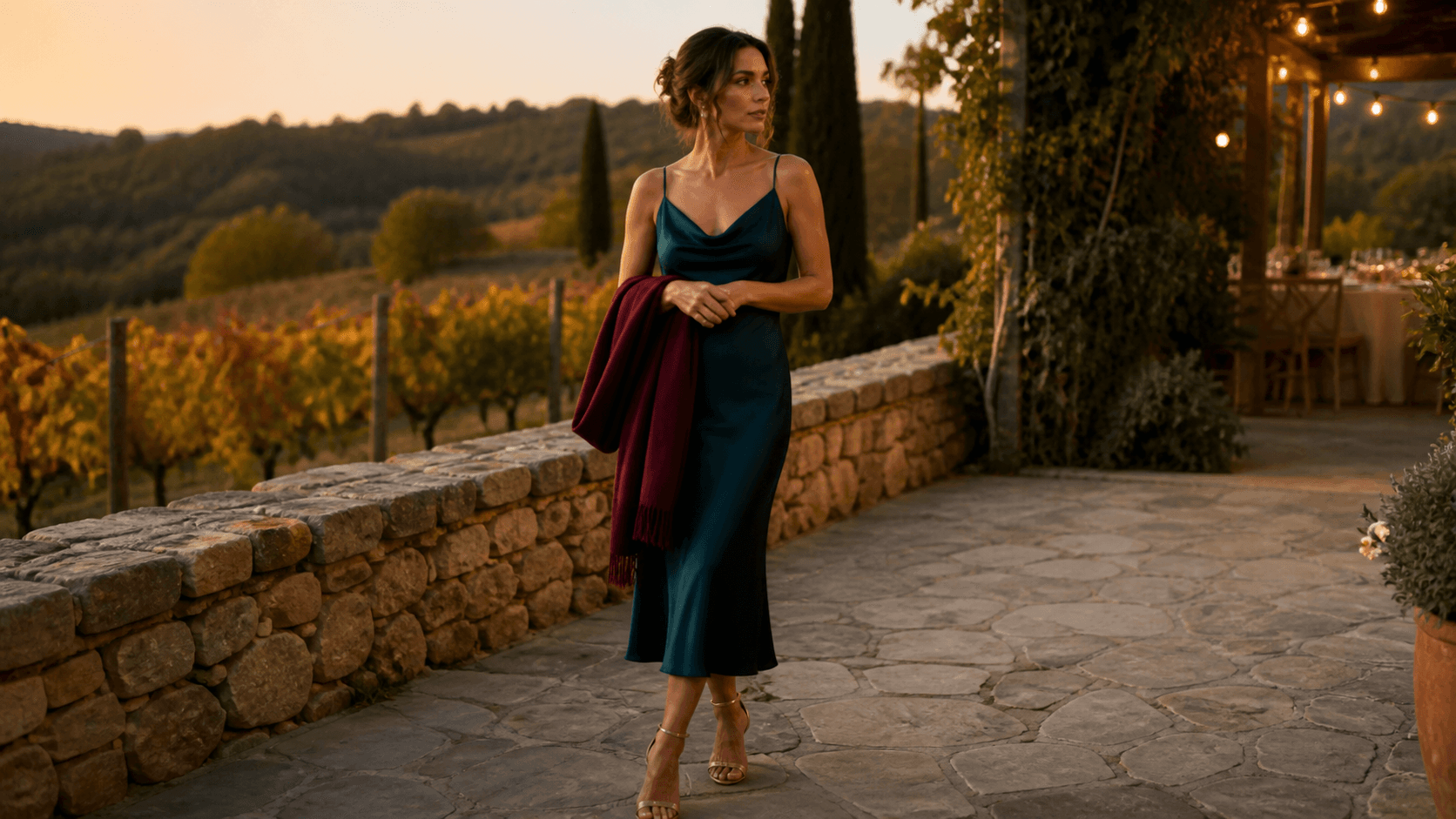
At 3:42 P.M., the vineyard is still warm.
Your dress catches the sun exactly the way it did in the product photos. The satin looks expensive. The straps stay put. You are relieved you ignored the velvet options that felt absurd in August.
Then the ceremony runs long.
By 6:07, the sun has slipped behind the hill. Drinks have moved onto a stone terrace. Your chair is damp with evening air, your shoulders are cold, and the emergency cardigan in your car makes the entire outfit look like two strangers sharing a hanger.
Nothing was wrong with the dress.
You simply bought it for the first photograph instead of the whole wedding.
That is the trap behind choosing a fall wedding guest dress. “Fall” sounds like a color palette. In real life, it is a three-month stretch in which a September afternoon can feel like July, a November cocktail hour can feel like winter, and one wedding can move through both conditions before cake.
Before you buy, run the 6 P.M. test. It asks whether the dress will still work when the temperature, light, location, and energy of the event change. The best answer is not always long sleeves or heavier fabric. It is an outfit designed for the wedding's full timeline.
Fall is not a temperature. It is a timeline.
Current fall wedding searches revolve around the same cluster of questions: Which dress code matters? Which colors feel seasonal? Is velvet too hot? Are bare shoulders too summery? What works for an outdoor ceremony and an indoor reception?
The volume of that uncertainty makes sense. The Knot reports that 35% of weddings happen in autumn, more than in any other season. Yet “autumn” does not tell you what the weather will do at one venue on one date.
A fall wedding has at least four climates:
- the trip from the car or hotel;
- the ceremony, often in the brightest and warmest part of the event;
- the post-sunset cocktail hour or photo break;
- the reception, which may be heated, air-conditioned, tented, drafty, or partly outdoors.
When shoppers ask what to wear to a fall wedding, they often imagine only the ceremony. The 6 P.M. test forces the missing scene back into the decision.
Picture the dress two or three hours after arrival. The light is lower. You have been sitting. The wind has changed. You are carrying a drink, greeting people, and moving between spaces. Does the outfit become better, remain easy, or start demanding rescue?
That answer matters more than whether the dress is technically rust, burgundy, or forest green.
The 6 P.M. test starts with the invitation—not your shopping tab
Before looking at dresses, write down five facts from the invitation and wedding website:
- Date and exact ceremony time
- Dress code
- Venue type
- Indoor, outdoor, or mixed spaces
- Any stated colors, cultural expectations, or terrain notes
Now add the sunset time for the venue and a normal temperature range for that place and month. You are not trying to forecast the day weeks in advance. You are locating the transition.
If sunset arrives during the ceremony, the outfit needs to handle cooling conditions earlier. If it arrives after dinner, a light dress may work for most of the event with one deliberate layer for later. If the venue is coastal, mountainous, or exposed, wind may matter more than the number on the forecast.
Then check the hourly forecast again 48 to 72 hours before the wedding. “High of 72” is nearly useless if that high happens at noon and the ceremony begins at five.
Your shopping brief should now sound specific:
Cocktail attire, early October, 4:30 P.M. outdoor ceremony, sunset during drinks, indoor dinner, gravel paths, likely 66 degrees at arrival and low 50s later.
That sentence can choose a dress. “Autumn chic” cannot.
Dress code outranks the season every time
The quickest way to get a fall outfit wrong is to let seasonal styling lower the formality.
A cozy knit dress may feel perfect for October and still be too casual for a formal wedding. A dark floral cotton maxi may look autumnal online and read like a daytime market dress beside evening gowns. Boots do not automatically turn a casual dress into cocktail attire.
Start with the code, then make that code work for fall.
- Black tie: Choose a floor-length evening gown. Add warmth through lined fabric, sleeves, an elegant wrap, or a coat—not by shortening or casualizing the dress.
- Black tie optional or formal: A gown is the safest answer. A highly polished midi can work when the construction and fabric clearly read evening. Our black tie optional wedding guest dress guide explains where that line sits.
- Cocktail: A refined midi, tea-length dress, or polished shorter dress usually works. Use our cocktail wedding guest dress guide to separate cocktail from semi-formal and casual options.
- Semi-formal: A dressy midi, wrap dress, elevated jumpsuit, or tailored set can fit. Fabric and finish still matter.
- Casual or dressy casual: You have more flexibility, but “casual” at a wedding still means intentional.
A strong fall formal wedding guest dress is formal first and seasonal second. Color, texture, and layers can express the month without rewriting the invitation.
The right fabric solves more than long sleeves do
Long sleeves are the obvious answer to cooler weather.
They are not always the smartest one.
A thin, unlined mesh sleeve adds atmosphere but almost no warmth. A heavy synthetic long-sleeve gown can become miserable in a heated reception. Meanwhile, a sleeveless dress in substantial crepe with a well-chosen wrap may handle both halves of the event beautifully.
Fabric determines how the dress holds heat, moves in wind, wrinkles after sitting, and looks under lower evening light.
For warm September weddings
Look for lined chiffon, lightweight crepe, silk-like satin, georgette, or another fabric with movement but enough substance to read as eventwear. Darker or muted color can make a warm-weather silhouette feel transitional without making you overheat.
This is where shoppers get trapped by the calendar. You do not need velvet on September 12 simply because retailers have moved into fall. If the event is still hot, borrow the fit and breathability checks from our summer wedding guest dress guide, then shift the palette or accessories.
For variable October weddings
Crepe, midweight satin, jacquard, lined lace, and substantial chiffon are useful because they can move between a sunny ceremony and a cold exit. Sleeves, a higher neckline, or a midi hem can help, but a planned layer is still valuable.
For cool November weddings
Velvet, heavier crepe, brocade, structured satin, lined lace, and dressy knits may finally make sense. Check the actual venue before committing. A crowded heated ballroom can undo your best cold-weather logic.
If two dresses look equally appropriate, choose the one whose fabric behaves better across the timeline. Our dress fabric guide explains the difference between drape, structure, sheen, breathability, and durability in more detail.
A layer is part of the outfit—or it is a surrender
The sad office cardigan appears when the layer was treated as emergency equipment.
Plan it while you plan the dress.
Good wedding layers include:
- a tailored evening jacket;
- a substantial pashmina or woven wrap;
- a cropped structured blazer;
- a velvet or satin bolero;
- a dressy capelet;
- a long formal coat for colder arrivals and exits.
The best layer repeats something already present: the dress's formality, a secondary color, a fabric texture, or the shape of the neckline. It should work in photographs and stay on your body without constant gripping.
Test the mechanics. Can you put it on without disturbing your hair? Does it slide off satin? Does it crush a statement sleeve? Can you sit in it? Is there somewhere to place it when dancing?
If you know you want coverage all evening, design it into the dress. A sheer decorative sleeve and a warm sleeve are different tools. Our guide to wedding guest dresses with sleeves can help you compare coverage, movement, and formality before defaulting to the heaviest option.
Fall wedding guest dress colors must work after sunset
Seasonal color advice often becomes a shopping list: burgundy, emerald, navy, plum, rust, chocolate, olive.
Those colors are useful. They are not mandatory.
The better question is how the color behaves in the wedding's actual light.
A near-black navy can disappear in a dark room. A pale blush satin can photograph much lighter under flash. A muted brown can look rich outdoors and flat against a dim wood interior. A white-based floral may read more white when the print loses contrast from a distance.
Check the dress three ways:
- View it in daylight.
- View it under warm indoor light.
- Photograph it with flash from several feet away.
If it turns bridal, sheer, dull, or dramatically different in one condition, decide whether styling can solve that. This matters especially for satin, sequins, pale metallics, and light floral bases.
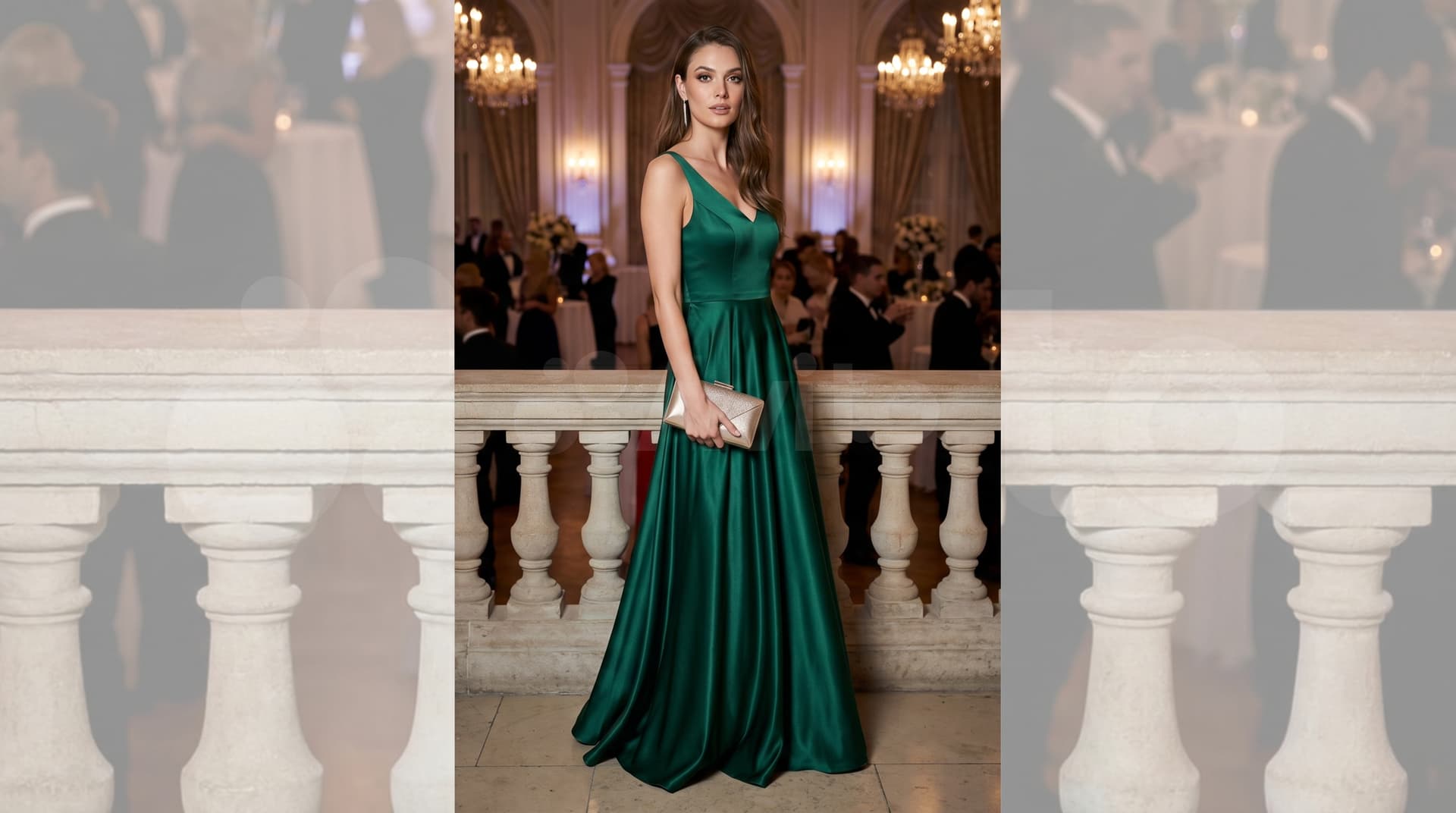
David's Bridal's current fall guest guide also puts dress code, venue, and weather ahead of color. That order is important. An emerald dress is not automatically right because it is emerald.
Your hem and shoes must survive the venue change
At 4 P.M., you are standing on grass.
At 8 P.M., you are dancing on wood.
At 10 P.M., the walkway back to the shuttle is wet.
The dress has to make all three trips.
For outdoor fall weddings, test the hem with the exact shoes you intend to wear. A floor-length gown fitted for stilettos can drag when you switch to block heels. A midi that looks balanced with sandals may hit differently with a closed-toe shoe. A narrow skirt can become difficult on steps or uneven ground.
Walk fast. Sit. Climb one flight of stairs. Step sideways. Get into a car. Put on the layer. Carry a small bag while doing it.
Watch the slit in motion, not just while posing. Check whether wind catches a wrap skirt. Make sure the lining does not stop well above the outer layer in flash photos. If the fabric clings after five minutes of sitting, it will not improve after dinner.
The 6 P.M. test is partly about weather. Mostly, it is about friction. Every tiny adjustment becomes more annoying as the event gets longer.
Use these fall wedding guest dress formulas when you are stuck
You do not need a completely new fashion identity for one invitation. Start with a reliable formula, then adapt it to the venue and code.
Warm September cocktail wedding
- lined chiffon or lightweight crepe midi;
- olive, deep teal, berry, cobalt, or a dark-ground floral;
- block heels or polished flats for mixed terrain;
- lightweight tailored wrap for after sunset.
October outdoor formal wedding
- floor-length crepe or substantial satin gown;
- navy, emerald, plum, oxblood, chocolate, or black;
- secure neckline and controlled hem;
- formal coat, structured wrap, or elegant jacket.
November indoor-outdoor semi-formal wedding
- jacquard, velvet, lined lace, or dressy knit midi;
- sleeves or a higher neckline if the venue is genuinely cool;
- closed-toe shoes;
- a layer polished enough to keep on through cocktails.
Fall wedding with no dress code
- investigate the venue, start time, wedding website, and invitation design;
- choose a polished midi or simple long dress rather than an extreme;
- avoid casual daytime fabric and bridal-adjacent color;
- ask the couple or someone close to them if the signals still conflict.
The formula is a starting point. The invitation gets the final vote.
Run the fitting-room version before the return window closes
When the dress arrives, do not try it on for six silent minutes in front of a mirror.
Rehearse the event.
Wear the correct undergarments and shoes. Add the layer, bag, and jewelry. Sit for twenty minutes. Walk outside if the temperature is similar. Raise your arms. Hug someone. Take daylight, indoor, and flash photos from the front, side, and back.
Then answer:
- Does the neckline need supervision?
- Can I sit without the waist or boning digging in?
- Does the fabric become transparent or overly reflective?
- Does the layer look intentional?
- Can I manage the hem on the venue's surfaces?
- Am I comfortable at both the expected high and the after-sunset temperature?
- Does the whole outfit still match the dress code at night?
Return the dress if it fails two or more categories and the fixes require wishful thinking.
“I will just tolerate it” is not a styling plan.
What if the perfect dress works at 3 P.M. but not at 6?
Do not abandon the design immediately. Identify the exact failure.
If the shape is right but the fabric is too thin, look for the same silhouette in crepe, lined chiffon, jacquard, or a heavier satin. If the dress is formal enough but too exposed, add compatible sleeves, raise the back, or build in coverage. If the color works but the available layer ruins the neckline, change the layer or integrate it into the dress.
This is where custom design can be practical rather than extravagant. You are not inventing a fantasy gown from nothing. You are combining proven elements into one coherent answer.
You can upload fall wedding guest dress inspiration and identify what to keep, what fails after sunset, and what should change. Or start a custom dress concept from a written brief using the dress code, venue, timeline, fabric, color, coverage, and movement requirements you uncovered.
The most useful prompt is not “make me a beautiful fall dress.”
It is:
Create a formal early-October wedding guest gown for a warm outdoor ceremony and cool terrace reception, with substantial drape, secure bust support, a walkable hem, and a coordinated removable layer.
That brief has a job to do.
Buy for the last photo, not only the first one
The first photo gets all the shopping attention.
The last photo tells the truth.
By then you have crossed the lawn, sat through dinner, found the cold edge of the terrace, hugged the couple, and danced. The perfect fall wedding guest dress is not the one that looked most seasonal on a product page. It is the one you stopped thinking about because it kept working.
So run the test.
Picture 6 P.M. Check the code. Read the hourly forecast. Plan the layer. Test the fabric in changing light. Walk in the actual shoes.
Then buy the dress that is still a yes after the sun goes down.